AI Video Analytics: How Smart Surveillance Is Transforming Traditional CCTV
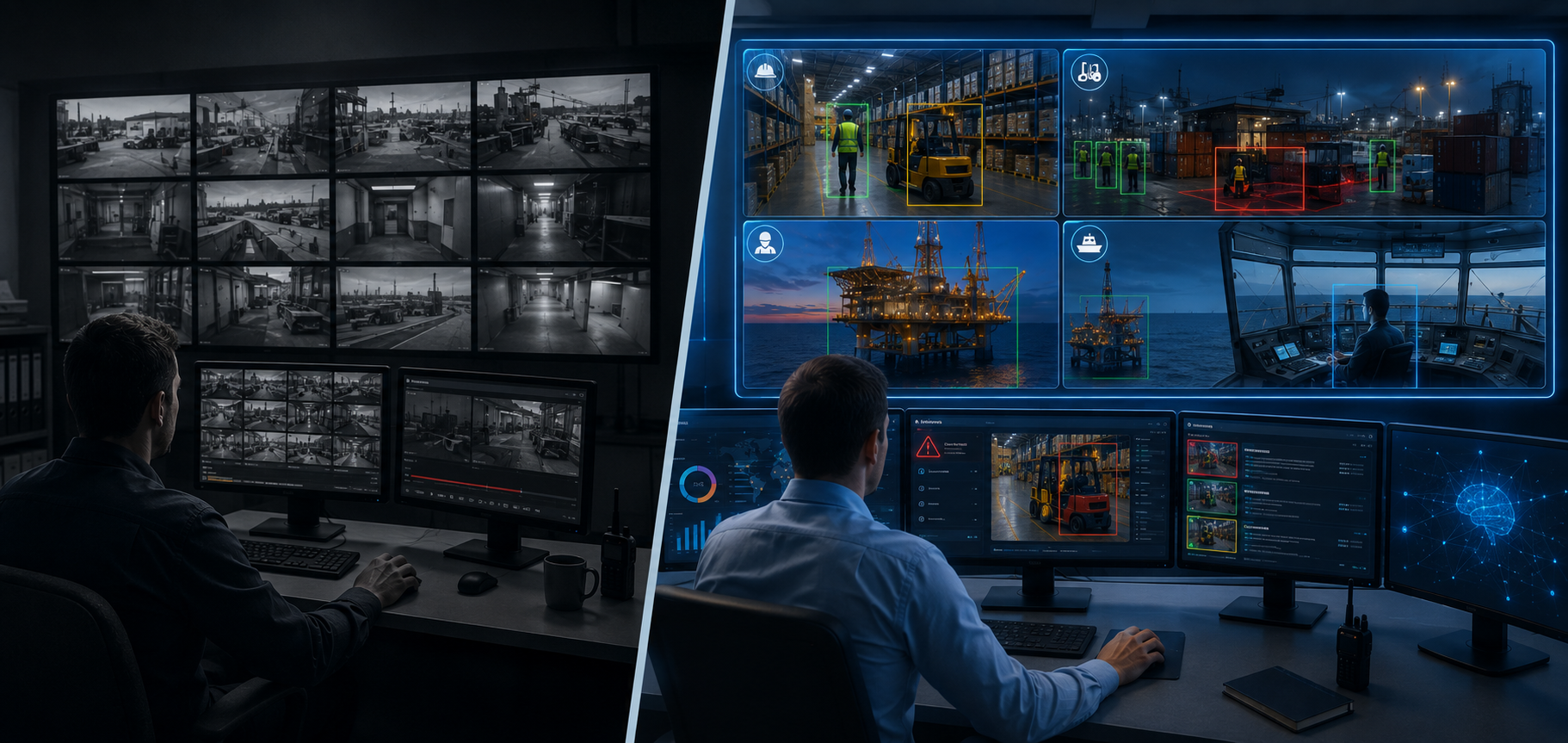
What AI Video Analytics Actually Is
At its core, AI video analytics is software that analyzes live video streams the moment they're captured, using computer vision models trained to recognize specific objects, behaviors, and events. Instead of a camera simply pushing frames to a hard drive, every frame is evaluated: Is there a person in a restricted zone? Is someone missing required safety gear? Has a vehicle entered an area it shouldn't be in?
The distinction that matters most is when this analysis happens. Traditional CCTV analysis happens after the fact — someone reviews footage once they already know (or suspect) something went wrong. AI video analytics moves that analysis to the moment the event occurs, which is the difference between catching a problem as it develops and discovering it hours or days later, if at all.
Traditional CCTV vs. AI-Powered Surveillance
Traditional CCTV systems are fundamentally passive. They record continuously, store footage for a retention window, and rely entirely on a human being to either watch a live feed in real time or search through hours of recordings after an incident is already reported. The camera doesn't know the difference between an empty hallway and an intruder — it just records both the same way.
AI-powered surveillance flips that model. The system is actively watching every feed, all the time, without fatigue or blind spots caused by juggling too many monitors at once. It doesn't replace human judgment — it directs human attention to the moments that actually warrant it, instead of asking a person to somehow watch everything, all the time, and never miss anything.
This shift matters most at scale. A traditional system with ten cameras might still be manageable for a single operator. A system with hundreds or thousands of cameras across multiple sites simply cannot be monitored the same way — not by adding more staff, and not by asking existing staff to watch more screens. Intelligence has to be built into the system itself.
Object and Event Detection
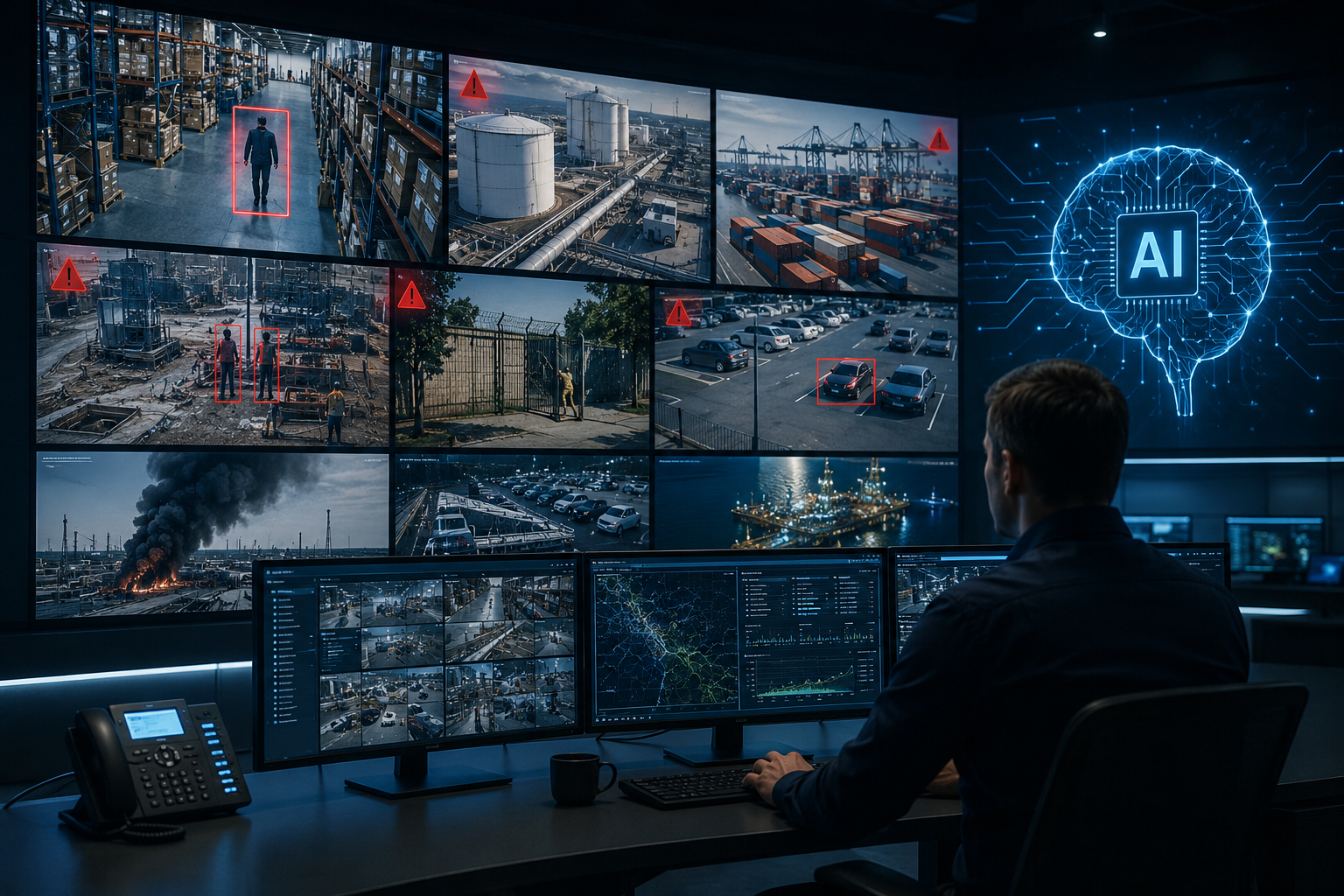
The foundation of AI video analytics is object and event detection — the ability to identify specific things happening on camera and classify them automatically. This can include recognizing people, vehicles, and equipment; detecting whether required safety gear like helmets, vests, or goggles is being worn; identifying falls, slips, or other safety incidents; flagging unauthorized entry into restricted zones; and spotting suspicious behavior patterns like unattended items or unusual movement.
What makes this useful isn't just detection in isolation — it's detection tied to context. A person walking through a warehouse aisle is unremarkable. The same person climbing over a perimeter fence, or standing in a zone marked for authorized personnel only, is exactly the kind of event a well-configured system should flag immediately.
Real-Time Alerts
Detection only creates value if it reaches someone who can act on it. That's why real-time alerting is as central to AI video analytics as the detection itself. When an event is flagged, the system needs to route that alert to the right person — a security desk, a floor supervisor, a facility manager — quickly enough that they can actually respond while the situation is still unfolding, rather than reviewing what happened after it's over.
This is also where AI analytics starts to function less like a camera system and more like an operational tool. An alert isn't just a notification — it typically comes with the supporting evidence attached: a timestamp, the specific camera or zone, a snapshot or clip of the event, and often a confidence score indicating how certain the system is about what it detected. That evidence matters both for fast response and for building an accurate record afterward.
Turning Footage Into Actionable Intelligence
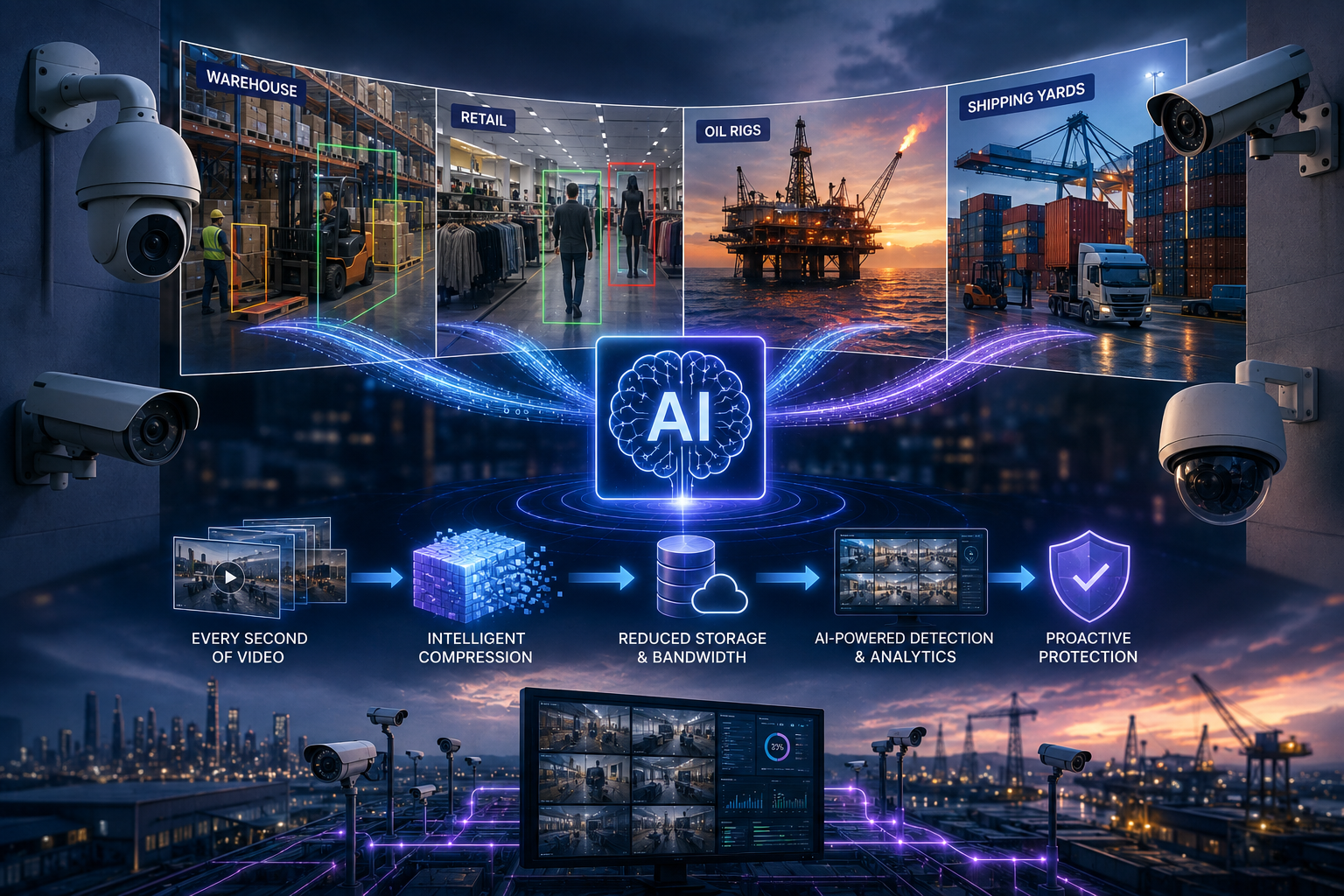
This is really the central promise of AI video analytics: footage stops being a passive archive and becomes an active source of intelligence. Instead of hours of recorded video that only becomes useful after someone already knows to go looking for something specific, every event becomes a structured, searchable record — what happened, where, when, and with what evidence — the moment it occurs.
That shift changes what surveillance can actually do for a business. It's no longer just a tool for investigating incidents after the fact. It becomes a live operational layer that can prevent incidents from escalating, support compliance efforts, and give operations teams visibility they never had into what's actually happening across their sites, in real time.
Why Enterprises Are Moving Toward Intelligent Surveillance
The shift toward AI-powered surveillance isn't happening because CCTV stopped working — it's happening because the scale of modern operations outgrew what passive recording could realistically support. Enterprises running multiple facilities, remote sites, or high-risk environments can't rely on a person catching every relevant moment across dozens or hundreds of live feeds. The volume alone makes that mathematically implausible.
At the same time, the cost of missing something has gotten more visible — safety incidents, theft, compliance failures, and operational blind spots all carry real financial and reputational consequences. Intelligent surveillance addresses that gap directly: it doesn't ask people to watch more, it makes the system itself responsible for noticing what matters and getting that information to a human being who can act on it, before the incident becomes a report.
That's the shift AI video analytics represents — from CCTV as a record of what happened, to a system that helps prevent what's about to.